
75% of Brits blame aches and pains on work

A new survey conducted by Printerland has revealed that three quarters of Brits attribute aches and pains to their office work life. The list includes eye strain (43%) severe headaches (32%) back pain (39%) and neck strain (31%). The survey also revealed that 17% of the respondents admitted they suffered from Repetitive Strain Injury (RSI) […]
HR professionals in demand amid geopolitical uncertainty

The latest figures from The Association of Professional Staffing Companies shows a demand for HR professionals with a rise of 4% year on year to March 2017, with the number of vacancies for recruitment specialists increasing to over 12% over the same period. March 2017 saw a 9% increase when compared to the same month […]
96% of HR professionals believe AI will enhance talent acquisition

New research by global talent acquisition and management firm Alexander Mann Solutions has revealed that 96% of senior HR professionals believe that Artificial Intelligence (AI) has the potential to enhance talent acquisition and retention. However, 57% of those polled were not comfortable with the current pace of technological transformation in their talent function, believing the […]
INDUSTRY SPOTLIGHT: Workday enterprise cloud applications
Workday is a leading provider of enterprise cloud applications for finance and human resources. Founded in 2005, Workday delivers financial management, human capital management, and analytics applications designed for the world’s largest companies, educational institutions, and government agencies. More than 1,000 organisations, ranging from medium-sized businesses to Fortune 50 enterprises, have selected Workday. Click here […]
Corporate culture key to achieving greater gender diversity

New research by Boston Consulting Group (BCG) has found that company culture is central to boosting gender diversity. The research revealed that promoting existing female talent is better for diversity than recruiting women. BCG, which interviewed chief executives, HR officers and 1,350 employees from 15 FTSE 100 companies, found that while senior managers favoured a […]
What does the election mean for wages & working conditions? Find out at the Employee Benefits & Rewards Forum
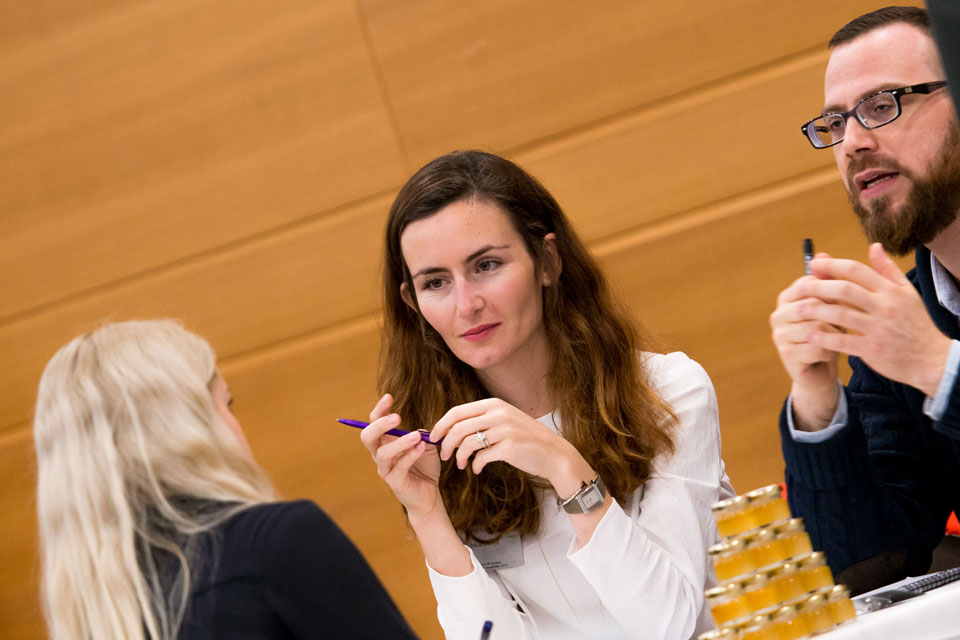
Wages and working conditions are shaping up to be key issues at the next month’s general election, with the minimum wage, national living wage and executive pay already key areas of debate among the main parties. And with significant policy differences between each, the landscape for those working in the field of employee benefits and […]
LinkedIn reveals UK’s most desirable companies to work for

LinkedIn has revealed its top 20 list of companies that Brits want to work for in 2017, encompassing 12 industries, including tech, retail, banking and media. The list is based on billions of actions taken by LinkedIn’s members, with the data analysed and scores ranking winners in each country. Top 20 LinkedIn Companies for 2017 […]
Mental health challenge facing HR professionals

Analysis by HR and diversity consultancy the Clear Company has found that HR professionals will on average oversee 15 staff with mental health issues. The findings were based on existing data-sets, with figures from XpertHR showing the median number of employees per HR practitioner was 62.5 in 2016, with approximately one in four people in […]
What will the election mean for employment issues? Find out at the London HR Summit
With the UK general election looming, details of the main political party manifestos are starting to emerge. For HR professionals, the key issues are set to be around the implications of BREXIT, tax, education & skills and employment rights, with considerable differences between each party’s approach to each. The London HR Summit, which takes place […]
Self-regulation key to working from home

New research from the Rotterdam School of Management, Erasmus University (RSM) has found that job performance in employees that work from home is driven by self-regulation and decision-making freedom, rather than previous beliefs that it was achieved through managerial or peer control. The data was gathered from 1,450 employees at four public and private organisations […]