



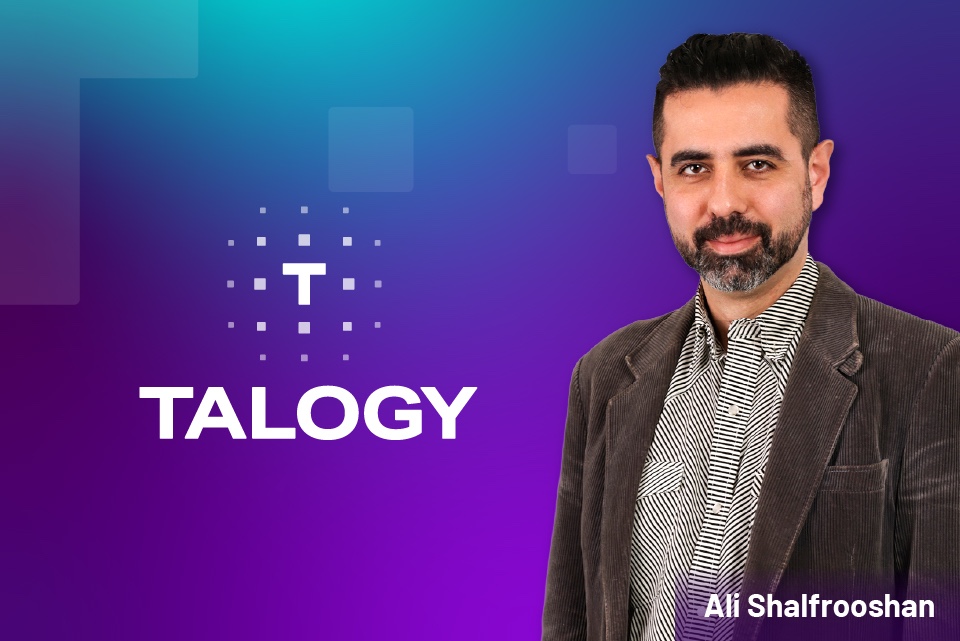
From leadership pipelines to AI, Talogy’s Director of Science Strategy shares how organisations can make smarter, evidence-based talent decisions in an era of constant change…
1. Tell us about Talogy and the role you play in helping organisations make better talent decisions.
Talogy helps organisations make better talent decisions by combining psychological science, talent expertise, and technology. At its core, our work is about understanding what drives success, how to measure those skills in order to identify and develop talent.
I work with organisations on how to identify and develop the right leaders, and how to make decisions that are evidence-based.
2. What have been the biggest challenges organisations have faced when identifying and developing talent over the past 12 months?
Many employees and leaders have found themselves overwhelmed by the volume of change and uncertainty they are being asked to navigate, including economic pressures, global instability, evolving ways of working, and the rise of AI.
Against this backdrop, organisations have faced mounting challenges in identifying and developing talent, as constant disruption and complexity reshape the landscape. For HR, decision-making has become an exercise in balancing urgent business needs with long-term workforce strategy, while the future unfolds in real time.
3. And what have been the biggest opportunities for HR teams when it comes to developing and retaining talent?
The same forces creating pressure, overwhelm and AI, are also opening up powerful opportunities for HR teams to rethink how talent is managed.
As change accelerates, there is a renewed opportunity to place human-centred, values-led leadership at the core. In uncertain environments, people are drawn to clarity and authenticity, making strong, grounded leadership a key driver of engagement.
At the same time, AI is enabling organisations to better anticipate future skill needs, and create more agile workforce strategies. Rather than replacing the human element, this moment calls for strengthening it, using technology to enhance, not diminish purposeful leadership.
4. What should be the biggest priority for HR leaders this year when it comes to building strong leadership pipelines?
The biggest priority is clarity on what future leadership truly requires. Too often, pipelines rely on outdated assumptions, and in difficult times, there is a tendency to fall back on what worked in the past, rather than evolve.
Recent research shows that purposeful, human-centred leadership is the most effective in challenging times, regardless of prevailing narratives. When people understand their values, their emotional intelligence and the right leadership behaviours for the new world of work, they lead with greater impact. Strong leadership pipelines don’t happen by chance, they are built through evidence-based choices about who to invest in and the qualities that matter most.
5. Many organisations struggle to identify and develop high-potential talent. What do organisations most often get wrong?
Many organisations struggle with three core mistakes, as highlighted by our high-potential research with over 1,000 employees, HR professionals, and leaders.
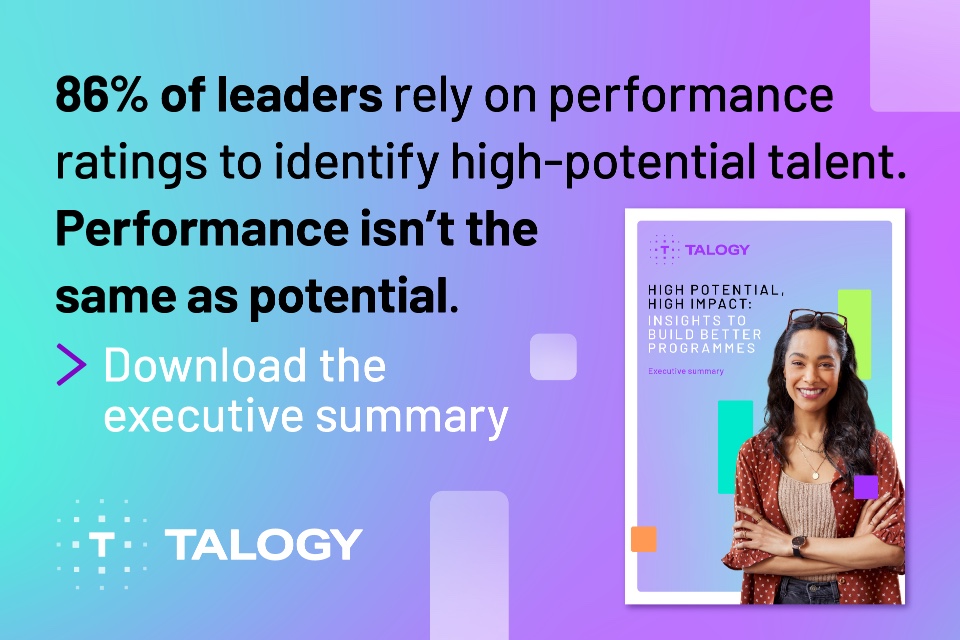
First, they conflate high performance with high potential, focusing on current results rather than future capability. Second, they over-rely on subjective judgement: 86–91% use performance ratings and over 70% rely on manager recommendations, yet only 30–45% use objective assessments. Third, they lack a clear, consistent definition of “high potential,” with 70% of HR and 61% of leaders using customised—but often misaligned—definitions.
The issue isn’t intent, but execution. Organisations that succeed clearly define potential, distinguish it from performance, and use evidence-based approaches.
6. As leaders move through different organisational levels, their responsibilities change significantly. How can organisations better prepare leaders for these transitions?
Leadership progression is not linear, it requires fundamental shifts in mindset and behaviour. Our research with over 2,200 employees, leaders, and HR professionals shows that 80% of leaders need to change how they lead at each transition, yet many feel unprepared.
There is also a clear capability gap with just over half of leaders rated as effective, despite their strong impact on performance and engagement. Support remains uneven: mid-level transitions are under-supported, while two-thirds of organisations say senior transitions are the most difficult. At the same time, 58% of senior leaders identify inspiring purpose as essential, yet it remains a key development gap.
Organisations that succeed treat progression as transformation, not promotion. They invest in targeted, evidence-based development and human-centred leadership capabilities.
7. What will separate organisations that manage talent effectively from those that struggle in the next few years?
The organisations that succeed will be the ones that take a more evidence-based approach to talent. Those that struggle often rely too heavily on instinct, bias, or informal judgement. There’s still a tendency in some organisations to trust gut feel over data, or to use data only to validate decisions that have already made. In contrast, organisations that invest in the right tools, use data effectively, and apply genuine objectivity to talent decisions will have a significant advantage.
8. Which technologies are likely to have the biggest impact on how organisations assess and develop talent?
AI will clearly have a significant impact, and it’s the obvious technology to highlight. But in reality, I think the biggest gains will come from using existing technologies more effectively. Many organisations already have access to valuable tools and data, but those systems aren’t always joined up, and insights aren’t always fully used. The real opportunity is to integrate those technologies better, use data more consistently, and make insights more actionable.
9. What’s the most exciting part of your role?
The most exciting part of my role is working on questions I find fascinating. How do we build better leaders, unlock potential, and how to make both smarter and fairer decisions about people.
There is a real sense that we are at an inflection point. As the world of work continues to evolve, organisations have a choice in how they move forward. There is a clear opportunity to build on progress and continue towards more evidence-based approaches to talent. Ultimately, when organisations do this well, it leads to better outcomes, not just for the business, but for all employees.
10. Succession or Peaky Blinders?
I am going to annoyingly say both. I don’t believe in binary choices when it comes to entertainment, and these are great examples of exceptional entertainment.
They explore work, leadership, and power from very different angles. Like many things in life, I am a strong advocate of experiencing different perspectives rather than forcing a single choice. But if threatened with violence, I would pick Succession.