



Businesses in the manufacturing sector should take a more empathetic approach to employee wellbeing and culture. This is according to a survey by O.C. Tanner, which highlights the growing need for stronger HR support for manufacturing companies to improve retention, engagement, and employee wellbeing. The manufacturing sector is one of many that has been under the microscope in recent years due to its male-dominated environment. Currently, women make up only 26% of the manufacturing workforce in the UK.
Beyond the uneven gender split and a reported lack of empathy in some businesses, employees in the sector report poor training and opportunities for upskilling, inadequate pay and benefits and an unsupportive culture.
However, there are businesses in the sector that are making positive workplace culture a priority. We spoke to Leanne Matthew, HR Business Partner at cable assemblies manufacturer GTK, to find out how businesses in the sector can improve their internal culture and, as a result, their employees’ wellbeing…
How HR Can Support Manufacturing Companies
Supporting manufacturing employees requires more than competitive pay. HR teams play a vital role in creating an environment where people feel valued, supported, and motivated to stay. From performance management and leadership development to wellbeing initiatives and family-friendly policies, a people-first HR strategy can have a measurable impact on retention and organisational performance.
Strengthen Performance Management to Improve Retention
60% of business leaders who prioritise performance management say they outperform their competitors. Despite this, 49% of employees say they don’t have regular performance conversations with their managers. Performance management offers benefits to both organisations and employees, including better business performance and stronger employee engagement.
Early in her role, Leanne prioritised putting a renewed performance management strategy in place, with a focus on:
- Regular, formalised one-to-ones as well as yearly reviews.
- Clear progression opportunities for employees performing well.
- Training and upskilling for employees looking to progress.
- Ensuring all teams and colleagues work to GTK’s overall goals.
Leanne comments: “It’s so important that our colleagues know what’s expected of them and what they should and can achieve in their roles. Then, at the end of the year, we look at how they’ve done. It’s always good to know when you’ve performed well and to get that recognition.
“But it’s down to more than just getting that pat on the back. While that’s important for motivation, it’s also essential that there are continuous two-way conversations between our people and their managers.”
With a LinkedIn study finding that a huge 94% of employees would stay at their business longer if they were confident it would progress their careers, the impact of progression opportunities is clear. Leanne comments: “We know we have a lot of talent, and we nurture it, develop it and put a lot of work into giving our people succession plans and roles to progress into.
“As a medium-sized business, we recognise that progression is not endless. We find ways to manage expectations and identify opportunities for people performing well and looking to advance their careers. We’re seeing the benefits of this, as our staff turnover has almost halved in the past six months from 13.8% down to 7.7%, which is significantly lower than the sector average.”
Invest in Training and Skills Development
One of the biggest challenges facing manufacturing businesses is retaining skilled employees. HR teams can address this by creating clear learning pathways, succession planning, and ongoing training programmes.
Upskilling not only prepares employees for future opportunities but also demonstrates that the organisation is invested in their long-term career. This can significantly improve engagement while helping businesses tackle skills shortages across the sector.
Equip Managers to Support Employee Wellbeing
Employees may experience both mental and physical health challenges, whether related to work or personal circumstances. Manufacturing workers report particularly high levels of workplace stress, making manager support a critical part of any HR strategy.
Leanne has led the introduction of a new employee handbook at GTK, including a formal stress and mental health policy alongside practical guidance for managers.
She says:
“We want our managers to be able to spot the signs of stress or poor mental health in their people. We’re building up a pool of resources for our managers to allow them to do that and support their people when they need it.
They’re the first point of contact for their teams, so it’s important that they’re able to identify someone who may need more support.”
By giving managers the confidence to have supportive conversations, HR helps create a culture where employees feel comfortable seeking help before problems escalate.
Reward Skills, Performance and Contribution
Pay remains one of the biggest reasons manufacturing employees consider changing jobs. Rather than rewarding service length alone, HR teams are increasingly recognising the value of skills-based pay and performance-related salary progression.
Leanne believes this approach creates a fairer and more motivating workplace.
“We have some fantastic skilled operators on our manufacturing floor, and the fairest way to compensate them is to pay based on that skillset and how well they demonstrate it at work.
That, coupled with performance-related pay rises, is really key to showing our colleagues that we value the work they do.”
Recognising and rewarding contribution helps retain skilled employees while reinforcing a culture of high performance.
Deliver Wellbeing Support Through Employee Assistance Programmes
Effective HR support extends beyond the workplace. While internal support from managers and HR is essential, employees also benefit from confidential, independent wellbeing services.
After reviewing employee feedback, GTK introduced a new Employee Assistance Programme (EAP) offering support across mental health, physical wellbeing, and financial wellbeing.
Leanne explains:
“We recently changed our EAP because we recognised that it only focused on mental health but not any other areas.
We take a holistic view of employee health and wellbeing and recognise that it goes beyond mental health. Physical health can sometimes be just as impactful, as good physical health can improve mental health, and vice versa. Then you have areas like financial wellbeing too.”
Since launching the new programme, GTK has seen a 237.5% increase in employee uptake, demonstrating the value of offering broader wellbeing support that reflects employees’ real needs.
Additional benefits, including shopping discounts and vouchers, further reinforce employee appreciation and loyalty.
Create Family-Friendly Policies That Attract Talent
HR also plays an important role in improving diversity and attracting a wider talent pool into manufacturing.
Family-friendly policies demonstrate that employers understand employees have responsibilities beyond work. While these policies benefit everyone, they can be particularly important in encouraging more women to consider careers within manufacturing.
Leanne says:
“We’re committed to creating an environment where women know they’re going to be supported and that they won’t be penalised for their life and family choices.
We have a lot of women in leadership here, so this is an area we identified as a priority.”
Supportive policies help create a more inclusive workplace while strengthening recruitment and retention across the organisation.
Communication Remains the Foundation of Strong HR Support
Across every initiative, one theme consistently stands out: effective two-way communication.
Leanne concludes:
“Communication is so key. Whether that’s via regular one-to-ones, performance reviews or regular updates from senior management, it’s essential. If you don’t have it, your people might feel that they’re not important in your eyes.
Two-way feedback is essential too; we consulted our colleagues when we revised our EAP and everyone is reaping the benefits of that. Don’t be afraid of feedback. Listen to what your people want.”
The Role of HR in Manufacturing’s Future
Strong HR support for manufacturing companies is about far more than policies and processes. It is about creating an environment where employees are supported, developed, recognised, and empowered to succeed. By prioritising performance management, training, wellbeing, manager capability, fair reward, and open communication, HR leaders can improve employee retention, strengthen workplace culture, and help manufacturing businesses remain competitive in an increasingly challenging labour market.
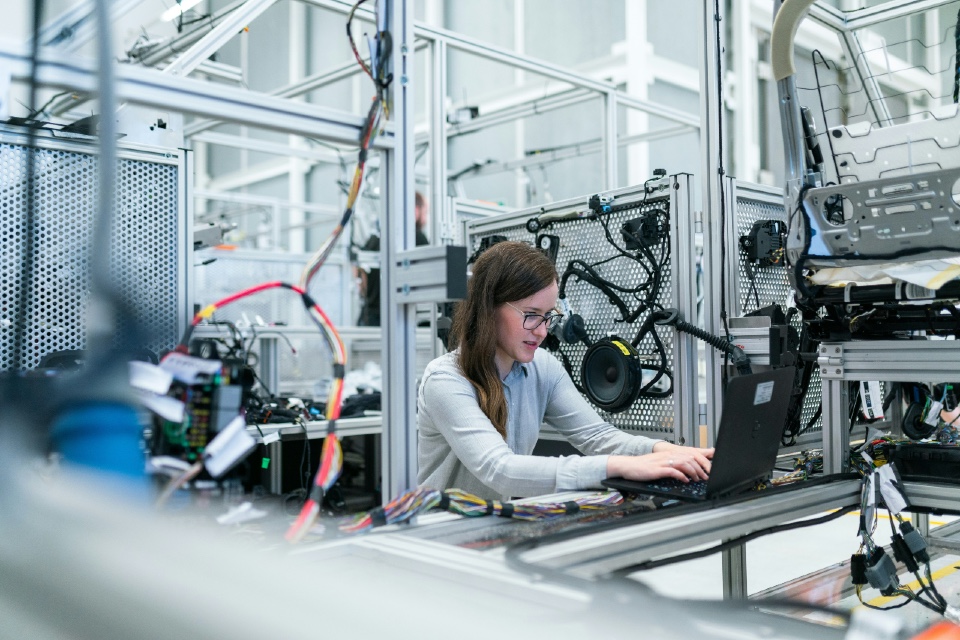
Photo by ThisisEngineering RAEng on Unsplash