
By Talogy
The term “high potential” has been floating around HR circles for years. But what does it really mean? And how can organisations distinguish employees with genuine future leadership potential from those who are simply good at their current jobs?
For businesses, answering this has never been more important. Skills shortages, demographic shifts and evolving employee expectations are reshaping how organisations must think about their people. Research shows high potential employees, known as HiPos, are 91% more valuable to a business than their non-high potential counterparts.
Here’s what organisations should look for
Spotting high potential is both an art and a science. It goes far beyond evaluating past performance or promoting those who shout the loudest. The most effective organisations take a rounded view, considering behavioural, cognitive and motivational factors together.
Potential often reveals itself in subtle but consistent ways. You might see it in people who adapt quickly, show curiosity and resilience in complex situations, and inspire others positively even without formal authority. They are also thinking one step ahead, beyond today’s tasks and toward what tomorrow can look like.
Cognitive ability matters too. HiPos often see connections across ideas, spot opportunities where others see roadblocks, and embrace feedback to improve. In the end, identifying high potential is about recognising capacity as well as capability.
Moving from identification to impact
Spotting HiPos is only the first step. The real value comes when organisations translate insight into action through stretch assignments, coaching and exposure to leadership experiences. The criteria used to identify HiPos should also be reviewed regularly as business needs change.
Why getting it right matters
The business case is compelling. Add just one of these individuals to a team and overall effectiveness can increase by 5–15%. Yet many organisations still rely on gut feel or manager recommendations, which can introduce bias and overlook quieter talent. A stronger approach combines structured assessment tools with continuous feedback and development opportunities to uncover potential and build a resilient leadership pipeline.
Further reading
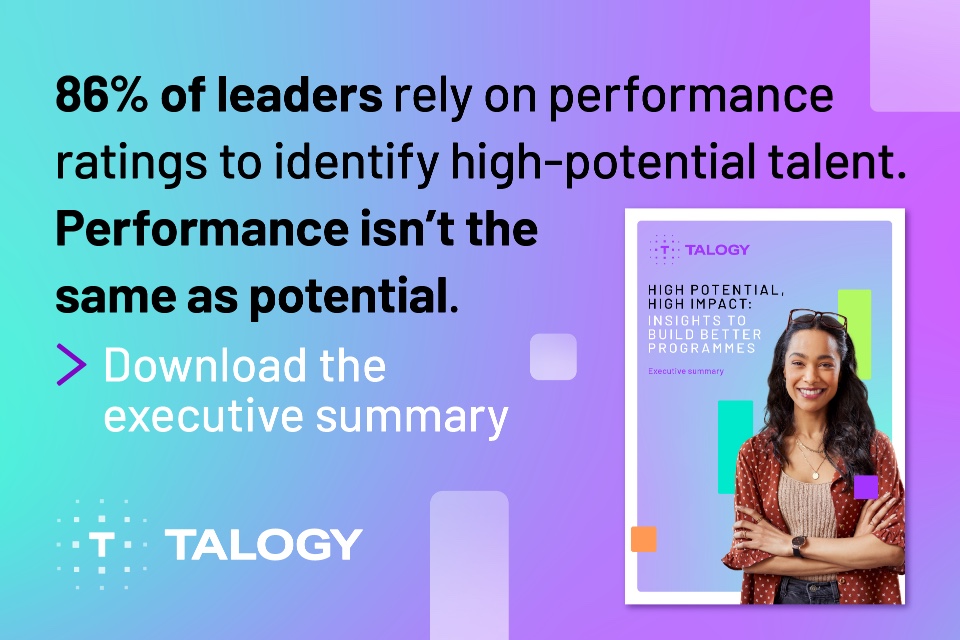
Talogy’s global research report, High Potential, High Impact: Insights to Build Better Programmes, explores how to define, identify, develop and retain emerging leaders for long-term success. Read the executive summary to learn more.